The Slow, Still Practice That Targets the Body’s Deepest Tissues
In a world of yoga classes set to pulsing music and rapid transitions between postures, Yin yoga asks practitioners to do something radical: stop moving. For three, five, or even ten minutes at a time, students settle into passive floor poses, surrendering muscular effort and allowing gravity to work on the body’s deepest layers. The room is quiet. The breath is slow. Time expands. This contemplative practice, which emerged in the late twentieth century from a fusion of Taoist yoga, martial arts wisdom, and Traditional Chinese Medicine, has become one of the fastest growing styles in contemporary yoga, offering a counterbalance to both the frenetic pace of modern life and the athletic intensity of many popular yoga forms.
The Philosophy of Yin and Yang
To understand Yin yoga, one must first understand the ancient Taoist concept from which it takes its name. In Chinese philosophy, yin and yang represent the complementary opposites that comprise all of existence: dark and light, cold and hot, passive and active, feminine and masculine, moon and sun. These forces are not in opposition but in relationship; one cannot exist without the other. They are like two sides of a single coin, perpetually interacting to create balance and wholeness.
In the context of the body, yin tissues are those that are relatively stiff and inelastic: the connective tissues of ligaments, tendons, and fascia, as well as the joints and bones. Yang tissues are the more mobile and pliable muscles and skin. Most forms of physical exercise, including the majority of yoga styles, emphasise yang qualities. They are dynamic, repetitive, and rhythmic, building heat in the body and strengthening muscles through active engagement. Yin yoga deliberately cultivates the opposite: stillness, coolness, and passive surrender. By relaxing muscular effort and holding poses for extended periods, the practice targets those deeper, denser tissues that yang activities cannot adequately reach.
The Origins of Modern Yin Yoga
The story of Yin yoga begins with a martial arts champion named Paulie Zink. In the late 1970s, Zink began teaching a synthesis of hatha yoga with Taoist yoga in North America, combining long held stretches with flowing movements and the energetic principles he had learned from his training. He called his method “Yin and Yang yoga,” though many of his early students, who came from martial arts backgrounds and had developed strong but tight muscles, focused primarily on the yin component: those extended, passive poses that addressed their lack of flexibility.
One of Zink’s students was a young yoga teacher named Paul Grilley. In the late 1980s, Grilley studied with Zink for about a year, learning the basic level of Taoist yoga with its emphasis on prolonged holds. What struck Grilley most powerfully was how these passive stretches affected the body differently than dynamic movement. He began to explore whether an entire yoga practice could be built around this yin principle, without the yang elements that Zink included.
Grilley’s understanding deepened when he encountered the work of Dr. Hiroshi Motoyama, a Japanese scholar who had researched the physiology of Traditional Chinese Medicine and explored the connections between the meridian system of Chinese medicine and the chakra system of Indian yoga. In 1989, Grilley began studying with Motoyama, learning how postures might affect not just physical tissues but also the subtle energy pathways described in Eastern healing traditions. He wove together what he had learned from Zink about passive holds, his own anatomical knowledge (he had studied anatomy in Montana and at UCLA), and Motoyama’s teachings on meridians into a coherent practice.
Initially, Grilley called his approach “Taoist Yoga” out of respect for Zink. But one of his students, Sarah Powers, suggested a different name. Powers had become deeply interested in the practice and was developing her own approach that incorporated Buddhist psychology and placed greater emphasis on the meridian system. She pointed out that what she and Grilley were teaching consisted primarily of yin poses, without the yang elements that characterized Zink’s complete system. The name “Yin Yoga” was born. Grilley’s first book, Yin Yoga: Outline of a Quiet Practice, was published in 2002, establishing the foundations of the style that would spread across the world.
The Teachers Who Shaped the Practice
Paul Grilley (born 1958) brought a rigorous anatomical perspective to Yin yoga. His studies of human skeletal variation led him to emphasize that not all bodies can perform all poses. Differences in bone structure, particularly the length and angle of the femoral neck, mean that what is possible for one practitioner may be impossible for another, regardless of flexibility or practice. This insight revolutionized how many teachers approach yoga instruction, encouraging a “functional” approach that prioritizes what a pose accomplishes in a particular body rather than how it looks from the outside. Grilley was awarded an honorary doctorate from the California Institute for Human Science for his work on the relevance of fascia to yoga practice.
Sarah Powers developed her own synthesis called Insight Yoga, which weaves Yin yoga sequences designed to stimulate specific meridians with a more yang flow practice influenced by Viniyoga, Ashtanga, and Iyengar traditions. Her 2008 book, Insight Yoga, presents Yin yoga as a gateway to meditation and explores the emotional dimensions of working with the meridian system. Powers emphasizes conscious, systematic breathing during yin practice and draws extensively on Buddhist psychology to illuminate the inner journey that long held poses can facilitate.
Bernie Clark, whose Complete Guide to Yin Yoga (first published in 2012) has become a standard reference, brought further anatomical and physiological rigor to the practice while making it accessible to a wide audience. Clark emphasizes three fundamental principles that define the practice: finding your edge, cultivating stillness, and holding poses for time. His website, YinYoga.com, has become a central resource for practitioners and teachers worldwide.
Targeting the Body’s Connective Tissues
The physical rationale for Yin yoga centers on the distinction between muscles and connective tissues. When we perform dynamic, repetitive movements, we primarily engage muscles. Muscles are yang tissues: warm, moist, elastic, and quick to respond to stress. They contract and release, growing stronger with active use. But muscles are not the only tissues that affect our mobility and physical wellbeing.
Surrounding and interpenetrating every structure in the body is a vast network of connective tissue. This includes the tendons that connect muscles to bones, the ligaments that bind bones to one another across joints, and fascia, the continuous web of fibrous tissue that wraps around and through muscles, organs, nerves, and blood vessels. Fascia in particular has gained increasing attention from researchers; some anatomists now describe it as an organ system in its own right, one that provides structural support, transmits force, and plays a role in proprioception.
These connective tissues share certain properties. They are denser and less vascular than muscle, meaning they receive less blood flow and therefore require more time to change. They are also less elastic; if you pull quickly on a ligament, it resists. But if you apply slow, sustained, moderate stress, connective tissue gradually deforms, a phenomenon known as “creep.” Yin yoga exploits this principle. By holding passive poses for several minutes, practitioners apply gentle, prolonged stress to connective tissues, theoretically encouraging them to become longer, more hydrated, and more resilient over time.
Proponents suggest that this sustained stress stimulates fibroblasts, the cells within connective tissue responsible for producing collagen, elastin, and the gel like ground substance that gives fascia its suppleness. When mechanically stressed, fibroblasts may increase production of these components, potentially leading to stronger, more adaptable tissue. The extended holds may also encourage rehydration of tissues that have become dry or “sticky” from disuse or aging, restoring some of the fluid dynamics essential for tissue health.
The Three Principles of Practice
Bernie Clark and other leading teachers describe Yin yoga through three fundamental principles: finding your edge, cultivating stillness, and holding for time.
Finding Your Edge
The “edge” is the point in a posture where you encounter significant sensation without crossing into pain. It is a place of appropriate stress, not strain. Teachers often invoke the story of Goldilocks: you want sensation that is neither too little nor too much, but just right. Finding this edge requires honest attention to the body’s signals. Many practitioners have learned to override or ignore physical sensations; yin practice asks them to listen again.
The edge is not fixed. As you settle into a pose and the tissues begin to release, what once felt like an edge may soften into ease. When this happens, practitioners may choose to move deeper, finding a new edge. This process might repeat several times during a single hold, as the body progressively opens. But the movement should always come from the body’s invitation, not from the ego’s ambition.
Cultivating Stillness
Once you have found your edge, the instruction is simple: stop moving. This stillness is essential to Yin yoga’s effects. Research on stretching suggests that it takes approximately ninety seconds of sustained load before muscles begin to release their protective guarding and allow stress to transfer to deeper connective tissues. Fidgeting, adjusting, and resettling interrupt this process. Stillness also has profound mental effects, inviting practitioners into a meditative state where they can observe the mind’s reactions to sensation and discomfort.
For some practitioners, stillness is the most challenging aspect of Yin yoga. The impulse to move, to escape intensity, to distract oneself is powerful. Physical or psychological conditions such as anxiety, PTSD, or restless leg syndrome may make extended stillness genuinely difficult. Teachers emphasize that the goal is not rigid immobility but a general quieting, and that modifications and adaptations are always available.
Holding for Time
Time distinguishes Yin yoga from virtually every other physical practice. While a typical yoga class might hold poses for five to ten breaths, Yin poses are held for three to five minutes at minimum, with advanced practitioners sometimes remaining in a single posture for ten, fifteen, or even twenty minutes. This extended duration allows the slow process of connective tissue change to begin. It also creates space for a deeper psychological journey, as practitioners confront boredom, restlessness, and the stories the mind tells about discomfort.
The Poses of Yin Yoga
Yin yoga employs a relatively small repertoire of poses, most of which are performed on the floor. Many have equivalents in hatha yoga but are given different names in the yin tradition to emphasize their distinct intention and approach. Where a hatha forward fold might involve muscular engagement and active lengthening, its yin counterpart asks for complete relaxation, allowing gravity and time to do the work.
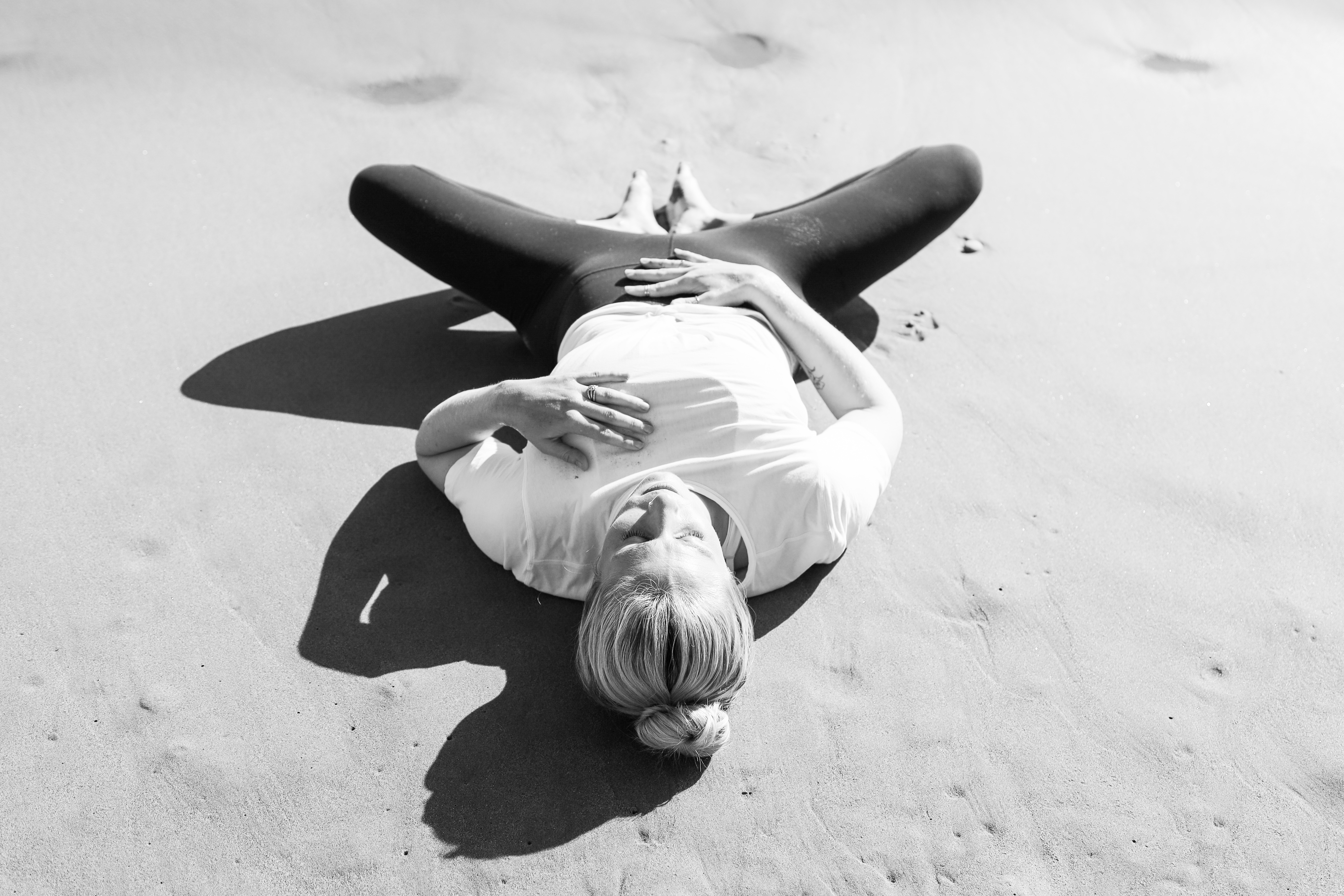
Butterfly pose (sometimes called Baddha Konasana in hatha yoga) brings the soles of the feet together and allows the knees to fall open, targeting the inner thighs and hips. Caterpillar, the yin version of Paschimottanasana, is a seated forward fold with legs extended, working the entire back body. Dragonfly (or Straddle) spreads the legs wide in a seated position and folds forward, opening the inner thighs, hamstrings, and hips. Dragon poses are a family of lunging positions that target the hip flexors and quadriceps. Sphinx and Seal are gentle and moderate backbends, respectively, that decompress the lower spine. Saddle reclines between the heels to stretch the quadriceps and hip flexors. Swan and Sleeping Swan work the external rotators of the hip.
Practitioners are encouraged to use props liberally. Bolsters, blankets, and blocks support the body so that muscular effort can truly release. A blanket under the knees in Caterpillar, a bolster under the chest in Sphinx, blocks under the thighs in Butterfly: these modifications are not signs of weakness but intelligent adaptations that allow each practitioner to find their appropriate edge without strain.
Meridians and the Energy Body
Beyond its physical rationale, Yin yoga draws deeply on the energetic framework of Traditional Chinese Medicine. In this system, vital life energy called qi (or chi) flows through the body along pathways known as meridians. There are twelve primary meridians, each associated with a major organ system and running along specific routes through the body. When qi flows freely through these channels, health prevails. When blockages or stagnation occur, illness and disharmony result.
The twelve meridians are organized into six yin and six yang pairs. The yin meridians (Lung, Spleen, Heart, Kidney, Pericardium, and Liver) run along the inner, softer surfaces of the body. The yang meridians (Large Intestine, Stomach, Small Intestine, Bladder, Triple Burner, and Gall Bladder) travel along the outer, more exposed surfaces. Each organ and its associated meridian is linked not only to physical functions but also to specific emotions. The Liver, for instance, is connected to anger and frustration; the Kidneys to fear; the Heart to joy and connection.
Yin yoga teachers suggest that different poses stimulate different meridians based on the areas of the body being stretched or compressed. Butterfly pose, which opens the inner thighs, is said to affect the Kidney, Liver, and Bladder meridians. Dragon poses, which work the hip flexors, may target the Stomach, Spleen, Liver, and Gall Bladder lines. By sequencing poses intentionally, practitioners can design sessions that support particular organ systems or address specific emotional patterns.
This energetic dimension connects Yin yoga to the broader tradition of acupuncture and acupressure, which stimulate specific points along meridians to restore balance. Some teachers describe Yin yoga as “acupuncture without needles,” a way of applying pressure to meridian pathways through posture rather than needles. While Western science has not verified the physical existence of meridians, many practitioners report tangible shifts in energy, mood, and wellbeing that they attribute to this meridian work.
The Benefits of Practice
Practitioners and teachers cite a wide range of benefits from regular Yin yoga practice. On the physical level, the extended holds are believed to increase flexibility and joint mobility, particularly in areas rich in connective tissue such as the hips, pelvis, and lower spine. By gently stressing ligaments and fascia, the practice may help maintain range of motion that tends to decrease with age and sedentary lifestyles.
The slow pace and emphasis on relaxation activate the parasympathetic nervous system, the body’s “rest and digest” response. This can lower heart rate, reduce blood pressure, decrease cortisol levels, and counteract the chronic stress that characterizes modern life. Many practitioners report improved sleep, reduced anxiety, and a greater sense of calm that extends beyond the mat.
The meditative dimension of Yin yoga may be its most profound gift. Holding a pose for five minutes with nothing to do but breathe and observe creates a container for self inquiry. Practitioners watch their minds react to sensation, resist discomfort, generate stories and predictions. They practice staying present with what is rather than escaping into distraction or fantasy. This training in equanimity and awareness has obvious applications to the challenges of daily life.
A Complementary Practice
Paul Grilley has consistently emphasized that Yin yoga was never intended as a complete practice in itself. “It was never my intention to promote Yin Yoga as an independent system of asana practice,” he has written, “because Yin Yoga is, by definition, incomplete.” Just as yin and yang require each other for balance, a body needs both passive and active movement for optimal health. Muscles require dynamic exercise to maintain strength; the cardiovascular system needs aerobic challenge; joints benefit from movement through their full range.
Yin yoga is therefore best understood as a complement to more active practices, whether those are yang styles of yoga like Ashtanga or Vinyasa, or other forms of exercise entirely. Athletes, runners, and those who do repetitive physical work may find that Yin yoga provides exactly the kind of deep, slow stretching that their bodies need to counterbalance their training. Office workers who spend hours in chairs may discover that yin poses help address the hip and back tightness that comes from prolonged sitting.
Many teachers now offer “Yin Yang” classes that combine both modes within a single session, perhaps beginning with activating flow sequences and concluding with long held floor poses, or alternating between the two modes to create a practice that addresses body and mind on multiple levels.
Who Benefits from Yin Yoga
Yin yoga is accessible to practitioners at virtually all levels of fitness and flexibility. Because poses are held passively with support from props, even those new to yoga or with limited mobility can participate. The absence of balance poses, inversions, and weight bearing on the hands makes it available to populations who might struggle with more athletic styles.
Those over fifty may find particular benefit, as the gentle stress on connective tissues helps counteract the natural decrease in flexibility that accompanies aging. The practice has also found enthusiastic audiences among athletes seeking recovery work, meditators looking for an embodied complement to sitting practice, and anyone seeking refuge from the overstimulation of contemporary life.
Yet Yin yoga is not without its challenges. The extended stillness can be psychologically demanding, particularly for those accustomed to constant activity. The intensity of sensation that builds over several minutes in a pose requires tolerance and equanimity. And certain poses may be inappropriate for those with specific injuries or hypermobility; as with any physical practice, working with a knowledgeable teacher helps ensure safety.
The Quiet Revolution
In barely four decades, Yin yoga has grown from an obscure fusion of Taoist and hatha traditions into a global phenomenon, taught in studios on every continent and embraced by millions of practitioners. Its rise reflects a growing recognition that the body needs more than strength and sweat; it also needs slowness and stillness. In a culture that often equates value with productivity and effort, Yin yoga offers a radical proposition: that doing less can sometimes accomplish more, that surrender can be as transformative as struggle, and that the deepest changes require not force but time.
For those who come to the practice, Yin yoga offers not just physical benefits but a different relationship with time itself. In the space of a single pose, five minutes can feel like an eternity or can dissolve into timelessness. The practice becomes a training ground for presence, patience, and the willingness to stay with what is. As the body opens, so too does something subtler, something that practitioners variously describe as energy, awareness, or simply a quieter mind. In the stillness, something moves.
References
[1] Wikipedia. “Yin Yoga.” https://en.wikipedia.org/wiki/Yin_Yoga
[2] Wikipedia. “Paul Grilley.” https://en.wikipedia.org/wiki/Paul_Grilley
[3] YinYoga.com. “Paul Grilley’s Discovery of Yin Yoga.” https://yinyoga.com/yinsights/paul-grilley/
[4] Paulie Zink. “Yin Yoga History.” https://www.pauliezink.com/yin-yoga/
[5] With Yin Yoga. “Origin, Birth and Evolution of Yin Yoga.” https://www.with-yinyoga.com/en/articles/origine-naissance-evolution-yin-yoga
[6] YinYoga.com. “The Meridians.” https://yinyoga.com/yinsights/the-meridians/
[7] Ekhart Yoga. “Introduction to Meridian Theory and Yin Yoga.” https://www.ekhartyoga.com/articles/wellbeing/introduction-to-meridian-theory-and-yin-yoga
[8] Learn to Teach Yin. “Basic Principles of Yin.” https://learntoteachyin.com/2019/08/20/basic-principles-of-yin/
[9] Gaia. “Yin Yoga Poses and Principles: Play With Your Edge.” https://www.gaia.com/article/yin-yoga-poses
[10] Inner Dimension Yoga. “The Science of Yin Yoga.” https://www.innerdimensionyoga.com/blog/the-science-of-yin-yoga-and-why-its-called-the-fountain-of-youth/
[11] YinYoga.com. “Yoga, Fascia and Fibroblasts.” https://yinyoga.com/yoga-fascia-and-fibroblasts/
[12] Arhanta Yoga. “What Is Yin Yoga? Ultimate Guide.” https://www.arhantayoga.org/blog/introduction-yin-yoga/
[13] YinYoga.com. “Three Beginning Flows.” https://yinyoga.com/yinsights/three-beginning-flows/
[14] Amazon. “The Complete Guide to Yin Yoga by Bernie Clark.” https://www.amazon.com/Complete-Guide-Yin-Yoga-Philosophy/dp/1935952501